Pages

Friday, March 18, 2011

Virtual Commission on the Status of Women Side Event

Weren't able to be in New York City for the Commission on the Status of Women at the United Nations? You can still see our side event, organized with the ecumenical group Ecumenical Women at the UN! The panel of speakers from around the world featured Milcah Lalam, whose ministry, RECONCILE, in Southern Sudan, has been supported by Presbyterian Women and the Presbyterian Church (USA) in a variety of ways.

Here is the list of participants:

Maxine Nodel is the founder and principal of the Millennium Art Academy high school in the Bronx, a school that won the 2009 Lincoln Center Institute first-place award for most imaginative curriculum in New York City. She is also an adjunct lecturer of education at Lehman College, C.U.N.Y. and a 2006 Columbia Teachers College Cahn Fellow Distinguished Principal. In addition to devoting the past 25 years to urban education reform, Ms. Nodel is also a visual artist and writer. She received her B.F.A. in fine art from the Cooper Union for the Advancement and Art and her M.F.A. in creative writing from Brooklyn College.

The Rev. Dr. Surekha Nelavala is an ordained Lutheran minister from India, rostered in ELCA. She carries diverse and wider experience from advocacy, ordained ministry, administrative and teaching positions in which she served. She is committed to the cause of bringing scholarship and people together in developing praxis-oriented liberating hermeneutics of the Bible.

Cecilia Castillo is Continental Coordinator of the Women and Gender Justice Pastoral (PMJG) of the Latin American Council of Churches (CLAI), with presence in 20 countries of Latin America and the Caribbean. Since 2008 she has been Technical Coordinator of the Regional Shelter House of the Grande ABC, São Paulo, Brazil, which shelters women victims of domestic and inter-family violence, threatened with death by their husbands or partners.

Milcah Lalam is a peace building development specialist with special expertise in trauma healing, drama as therapy and story-telling. She works closely with women, children, youth, victims of rape and abuse, displaced persons, development and human rights workers in post-war contexts. She currently works with RECONCILE in South Sudan. She has facilitated peace building interventions with women and children and led reconciliation and trauma recovery processes initiated by women for women between communities experiencing inter-ethnic violence. As a psychosocial rehabilitation coordinator for RECONCILE, she developed the trauma recovery manuals and pioneered the use of drama for trauma awareness and healing. The work of RECONCILE is supported in part by The Presbyterian Church (U.S.A.) and Presbyterian Women.

The Rev. Heidi Neumark has worked in urban ministry for 30 years, mostly in the South Bronx and in Manhattan. She has worked with many women, children and young people impacted by poverty, violence, including domestic violence, and HIV/AIDS. She was a founding member of South Bronx Churches which gave rise to women leaders engaged in organizing work to improve their lives and community. Her present congregation also has a group called Mujeres en Progreso, a Latina support group that seeks to be a transformative community for women and their children.

Watch video of the side event (in 4 parts) here:

Thursday, March 17, 2011

CSW 55 Round-up


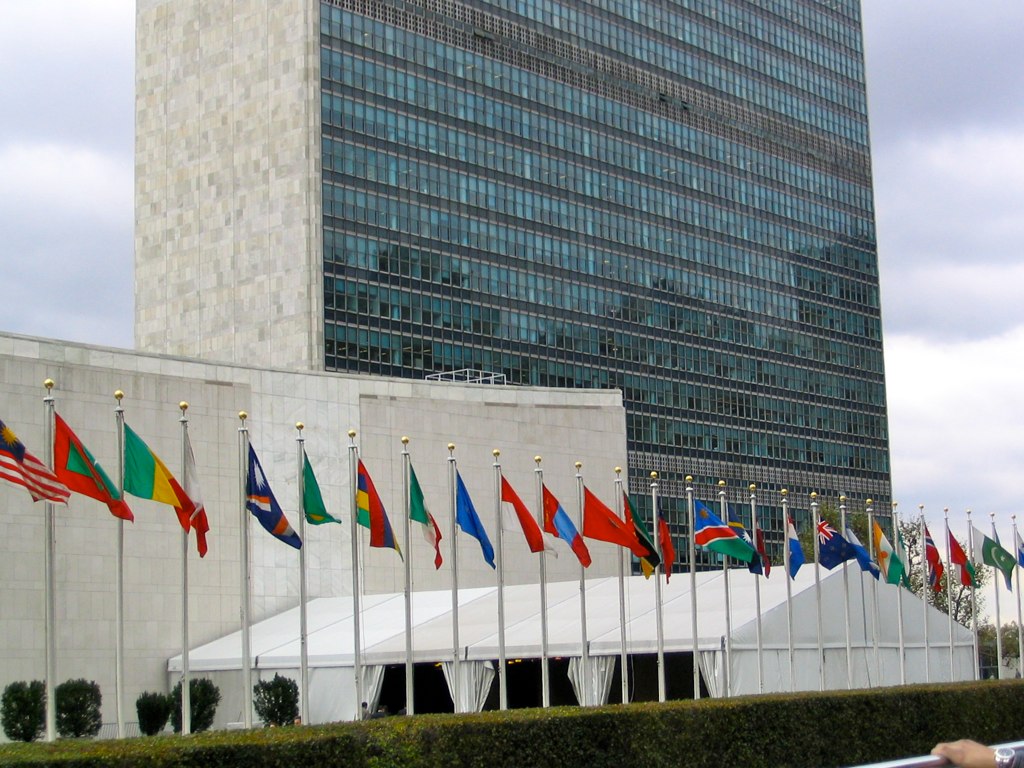
As the flags in front of the UN continue to flap in the breeze, Presbyterian participants in this year's Commission on the Status of Women have returned home, agreed conclusions have been accepted, and the theme for next year (the empowerment of rural women and their role in poverty and hunger eradication, development, and current challenges) has been set. What difference did it all make?

Check out the agreed conclusions online here. Working together with a coalition of organizations and denominations known as "Ecumenical Women at the UN," Presbyterians helped shape talking points and lobby delegates. Our talking point "End the disproportionate effects of violence against women and girls: Quality Education and equitable employment require healthy and safe learning and working environments" was incorporated into two changes in the final outcome document.
  • Firstly, on page 3 paragraph 17, the word bullying was approved and remains in the document, along with discrimination, violence and sexual harassment. This language came from our pointed language suggestions and positive dialogue with several Member State representatives.
  • Secondly, on page 7 paragraph (r), language was agreed upon regarding school environment, infrastructure and transportation, which was an element and recommendation that was discussed in detail in a meeting Ecumenical Women held with Representatives from the Chilean Mission.
Many Presbyterians who attended CSW plan to share what they learned with their communities--and a few other tools to share the work of CSW resulted from this gathering. Two advocacy resources are available to help you and your community make a statement on the violence in Libya and Côte d'Ivoire. Download them and take action!

Presbyterian Women who attended CSW also felt strongly about encouraging the US ratification of the Convention on the Elimination of all forms of Discrimination Against Women (CEDAW). Find out more about CEDAW at www.CEDAW2011.org!

Image by Martin Swart (UN Flags Uploaded by Smooth_O) [CC-BY-SA-2.0 (www.creativecommons.org/licenses/by-sa/2.0)], via Wikimedia Commons

Wednesday, March 02, 2011

Nothing Is Lost on the Breath of God


Pam
Pam Tankersley of thePresbyterian Church of Aotearoa/New Zealandspoke at the Ecumenical Women's worship service this morning. She reflected on the earthquake that struck her country - of the loss of human life - the injuries - the pain in the hearts of the people - the devastation. Pam also shared stories of hope and courage and faith and efforts to clean up and plans for rebuilding. And in a powerful moment of affirmation, she shared a song by New Zealand's Colin Gibson - Nothing is Lost on the Breath of God.

Hold the people of New Zealand in prayer.

Learn more about the earthquake and its aftermath.

Ratify CEDAW

On behalf of Presbyterian participants in the 55th Session of the Commission on the Status of Women, Louise Davidson of Presbyterian Women invites the ecumenical community to join in an advocacy effort to secure Senate ratification of the Convention to Eliminate All Forms of Discrimination against Women. Participants in the Commission see ways this convention can benefit women in the United States and around the world.


Video courtesy of Mark Koenig, Director of the Presbyterian Ministry at the UN. Read more here.

Tuesday, March 01, 2011

From the Midwest to the UN: One Woman's Story

By Cindy Eschliman

It is not often that I am put in a position of being in the minority. I am a young, white woman, who grew up in Hutchinson, KS – the center of the Midwest and I now attend college in Hastings, NE – an even smaller Midwestern town. The Midwest is typically considered to be sparse and without diversity (I can say from experience that although this is not necessarily true, in comparison to larger cities, there is much less integration and understanding). So, when I arrived at LaGuardia Airport on Friday, February 18th, I was shocked to hear the loud buzzing city, to see the packed, busy, dirty streets and taste the difference in the air.

As it turned out, I was rooming with a young, Hispanic woman, who would describe her first language as Spanish. The other young Presbyterian women I was gathering with also spoke Spanish – I was the only one who didn’t. Respectfully, they spoke English with me and around me because they wanted me to be invited into their conversation. This consideration was a shock to me. English was the only language I knew, let alone was used to hearing. Throughout the week I was surrounded by women (and a few men), who were from all different communities, countries, cultures and spoke different languages. And just as one young woman spoke of her enlightenment to the realization that God is the God of everyone, not just people like her (or those who speak her language), I too was exposed to this broader understanding of God. Although, I had always know in my heart that God is the God of all, this week I have been able to see it in practice.

I am entirely thankful to have been given the opportunity to attend the United Nations Commission on the Status of Women. The experience has opened my eyes to the wonder of diversity and how to advocate, specifically on behalf of women all over the world. Too often, I feel inadequate and uneducated as to how to even interact with people of different cultures, languages and race because I have not been exposed to such diversity. This week provided me with a safe space to ask questions and open up about how I am so afraid of accidentally offending someone different than me. The women listened to my confession and welcomed me with open hearts; I cannot thank them enough for their support.

The United Nations Commission on the Status of Women was focused on providing women and the girl child with equal access to science and technology. Theologically, the theme of access was interesting to point out. During one of the Ecumenical Women orientations we took a closer look at Romans 5:1-5,

“Therefore, since we are justified by faith, we have peace with God through our Lord Jesus Christ, through whom we have obtained access to this grace in which we stand; and we boast in our hope of sharing the glory of God. And not only that, but we also boast in our sufferings, knowing that suffering produces endurance, and endurance produces character, and character produces hope, and hope does not disappoint us, because God’s love has been poured into our hearts through the Holy Spirit that has been given to us.”

Throughout the passage are words such as “boast,” “sufferings,” “endurance,” “character,” and “hope.” To society, about half of these words look negative and half positive, but in the context of this passage, they are all positive, leading to better things along the way. And so, when I take this and apply it to women and women’s rights across the world, I see that women have taken a stand, a strong fighting stance, against violence, unequal pay, unfair conditions and anything that might oppress the woman/ girl child. So, although, women have suffered, we are enduring, and producing character – one that includes equal access and this gives us hope that one day, the world will reflect God's love for all people.

Since I returned from the eye-opening trip, I have already begun to express my newfound appreciation for women all over the world. I have started to understand that I am a part of a great network of women all across the nations. And I have started promoting the increased awareness of women’s rights for all peoples.

So, I will forever be working for women’s equal access to science and technology (and in every aspect of life) here, because a vote for women here, is a vote for women everywhere.


Pictures taken by Christine Mangale. Cindy Eschliman is a member of the National Network of Presbyterian College Women.

A world where all live, all thrive

Carolyn Groseclose Sprinkle, a member of Presbyterian Women from Sparta, North Carolina, reflects on her experience at the 55th Session of the Commission on the Status of Women. She considers God's vision of a world where all live and all thrive - and how we can work to bring that world into being. Carolyn and the other Presbyterians engaged in the Commission throughEcumenical Women.

Video courtesy of Mark Koenig, Director of the Presbyterian Ministry at the UN. Read more here.

Going home to make a difference

Pam Snyder, a member of Presbyterian Women from Staunton, Virginia, reflects on her experience at the55th Session of the Commission on the Status of Women. She considers what she has learned and what she will do when she returns home. Pam and the other Presbyterians engaged in the Commission throughEcumenical Women.

Video courtesy of Mark Koenig, Director of the Presbyterian Ministry at the UN. Read more here.

Monday, February 28, 2011

Now Brothers and Sisters

"They are now brothers and sisters, and now death amongst us shall stop."

That's the promise made by Nuer women and Murle women in South Sudan who worked with RECONCILE International - a promise all the more amazing because of the conflict between these peoples.

IMG_3342Milcah Lalam, Programs Manager & Acting Principal for the RECONCILE Peace Institute, told the story during an adult education class at First Presbyterian Church in the City of New York.

Inter-ethnic fighting between the Murle and Nuer tribes claimed many lives during 2009. RECONCILE reports:

There are many explanations for the fighting, ranging from decades-old disputes to third-party spurning and instigation. Whatever the case, the violence has heightened, and now involves relatively new instances of women and child casualties and abductions. Such intense conflict has had an extreme traumatising effect on members of the two tribes, especially women and children.

Recognizing the need to address the emotional and spirtual wounds in the Nuer and Murle communities, as well as the conflict between the ethnic groups in general, RECONCILE sought a way to respond.

With the support of Presbyterian Women, RECONCILE led three workshops in November, 2009 - two in Murle communities and one in a Nuer community. From these workshops, the Nuer and Murle women began a written conversation that focused on the desire to meet and work for peace among their peoples. This conversation led to meetings between the women. And at one of those meetings, RECONCILE reports:

The women ‘shared’ babies with each other. This act carried a very deep traditional peacemaking commitment. The women explained the significance this way: “My baby is yours and yours is mine, and now these are our children. They shall not fight against each other for they are now brothers and sisters, and now death amongst us shall stop.”

Supported by RECONCILE, the Murle and Nuer women continue the journey to peace.

IMG_3354Milcah also talked about RECONCILE's work to heal the trauma endured by the people of Sudan through years of war and violence. Often this trauma-healing involves the use of art, drama, and games.

Watch for video clips of Milcah's presentation.

Milcah is present in New York for the Commission on the Status of Women. Her visit is made possible byPresbyterian Women.

The Presbyterian Ministry at the United Nations hosted the Presbyterian participants in the Commission and arranged for Milcah to lead the adult class at First Presbyterian.

Tuesday, February 22, 2011

Intergenerational Empowerment and the Work of the Church at the 55th Commission of the Status of Women


By Honna Eichler


I am currently sitting in the PC(USA) office in the UN Church Center, peering out the window at the busy UN complex below. The streets below are vibrantly full and include many from an international community dedicated to the rights and empowerment of all women. In the moments between the dozens of competing events, secondary events and parallel events, I pause to reflect on my experience at CSW so far and how it has informed my conviction on the responsibility of church in accompanying women worldwide wide. I will focus on a theme I have quickly become aware of: empowering an intergenerational community of religious advocates.

I first became acquainted with the other Presbyterian delegates to the 55th Commission on the Status of Women through email and Facebook. I was truly blessed to find that the people I knew only as user names on a screen transformed into a community when I entered the Ecumenical Women's CSW Orientation just two short days ago. As a PC(USA) delegate, I met and heard from a Presbyterian delegate from the newly formed South Sudan (!!!) and delegates from parts of Africa, New Zealand, the Middle East, South America and Europe. We were joined with similarly minded Methodists, Lutherans and Episcopalians from around the world.

I could tell right away that this collection of Ecumenical Women was unique for two reasons. First, it was the only ecumenical event I attended (or heard about) that was intergenerational: there was a good balance of women (and a few men) of all ages. The affirmation of the empowerment of a young adult delegation was obvious and enthusiastic. Secondly, there was an emphasis on articulating one's theological conviction through advocacy in the public sphere.

As a young adult, I am thankful for the generous distribution of collective wisdom from the women here who have gone before me. Several women I have met have decades of experience with Presbyterian Women, social policy and public advocacy and have openly shared their stories, experiences and wisdom. I would say a teaching spirit exists in this space - one I have not frequently encountered. These conversations helped me realize that the church must seek to accompany and empower women at all stages of life.

Accompanying women world-wide begins locally and only then moves abroad. Locally, those within a church can seek to foster intergenerational relationships that are affirming and empowering. (This goes against the age-based segregation often common to many worship communities.) Intergenerational relationships and empowerment can occur as women seek to hear each others stories and find ways to articulate their theological convictions in the public sphere. Often this is difficult and complex work and can only be accomplished through the open sharing of resources and collective wisdom.

In the same vein, the church must listen to the stories from those outside its local context. Some of my greatest learning these past few days has come through personal stories of oppression from women around the world. In short, there is a need to become aware of the voices of women through intentional outreach and engagement. This doesn't happen absent hard work, which is often hard to come by, but it must happen in order for theology to be inspired by the relevant events of its historical context.

When there is a lack of intergenerational empowerment, relationships break down and it is harder to continue the work inspired by the dedication of those who have gone on before.
Those who have power within the church must affirm the empowerment of women at all stages. I am thankful and hopeful for the many examples I have already experienced of this empowerment while at the CSW. Through intergnerational empowerment, those within the church become aware of existing and forming oppressive structures and accompany the suffering and oppressed, and, importantly, do so in a way that is sustainable for future generations.

--
Church: Edgewater Presbyterian Church
Blog: State of Formation
Twitter: @HonnaEichler
Facebook: Honna Eichler
Work: Interfaith Worker Justice

Thursday, February 10, 2011

Coming Soon...The Commission on the Status of Women

The Presbyterian Ministry at the United Nations is preparing to welcome Presbyterian participants for theCommission on the Status of Women from February 22 through March 4. Presbyterian Women is a key partner in this event.

The Commission on the Status of Women is dedicated exclusively to gender equality and advancement of women. Every year, representatives of Member States gather at United Nations Headquarters in New York to evaluate progress on gender equality, identify challenges, set global standards and formulate concrete policies to promote gender equality and advancement of women worldwide.

This year's commission will address the theme - "access and participation of women and girls in education, training, science and technology, including for the promotion of women’s equal access to full employment and decent work."

Presbyterians will gather with women and men from around the world - meeting, networking, sharing stories and ideas, and building community. They will worship, learn, and advocate as the commission works on agreed conclusions - recommendations for ways the nations of the world can work to promote the equality and advancement of women.

Watch Swords into Plowshares, the Presbyterian Ministry at the United Nations Facebook page, Presbyterian Women's Web page and Facebook pagefor stories about the Commission on the Status of Women


By Mark Koenig, Director of The Presbyterian Ministry at the UN, cross-posted from Swords into Plowshares

Friday, March 05, 2010

A Message from World Day of Prayer Chile

by Ann Ferguson

On this World Day of Prayer day, we received the message below from the World Day of Prayer International Committee (WDPIC). The women of Chile have written the material for 2011. WDP committees around the world are busy preparing the 2011 material for distribution in their countries next year. World Day of Prayer is close to the hearts of Presbyterian women. We were there at the beginning over 80 years ago and continue to be involved.

At the churchwide level Susan Jackson-Dowd, Communications Coordinator for Presbyterian Women serves as vice-chair of the World Day Prayer USA Committee. For the past 5 years, Presbyterian Women's communications staff have produced the beautiful print material women in the U.S. have used . Even more importantly, Presbyterian women across the country provide leadership for and the seats at local events.

We share this message from WDPIC with all of you. While this day of prayer may be coming do an end, women will continue to pray for each other and the world, tomorrow and every day.

March 5, 2010

Re: Earthquake in Chile, February 27, 2010

Dear Sisters in Christ,

In January we heard the cry for help from Haiti. Now hardly 6 weeks later there is a cry from Chile because an 8.8 magnitude earthquake struck central Chile at 3:30 in the morning of February 27. Its impact extended 70 miles south to Concepción and north to Santiago, the country’s capitol, and created a tsunami that ravaged a 435-mile stretch of Chile's Pacific coast. The official death toll reached 802 on Wednesday, March 2. Those who have survived are witnesses to the trauma of the earthquake and the destruction it has brought.

As there was with Haiti, there is a WDP linkage to Chile as we turn to them for WDP in March 2011.

Now as we are being introduced to the majestic Andes Mountains and the long, long Pacific seacoast we are also witnessing that the geological forces that shaped this land are still active and able to cause immeasurable damage.

In the worship service on the theme, “How Many Loaves Have You?,” the women of WDP Chile describe times of crisis in Chile’s history and how the people of Chile found in their faith the strength to work together and to share what they had. This message has its newest expression as they cope with the consequences of the earthquake.

Fortunately through Elisabeth Delmonte, we have heard from three members of the WDP Committee of Chile:

From Trinidad Urzúa (Coordinator of the WDP preparations for 2011), who lives nearest to the epicenter:

In these moments of desolation and sadness, very slowly the help organizations are getting organized. The image of our beautiful country in this situation is causing our dismay, but the reaction of solidarity arises again, there are again soup kitchens and different activities to help overcome the pain of having lost human lives and of having to look at the desolation and destruction in the country.

We have no news yet from the sisters in Concepción, only from Santiago. The services of water and electric power have been reestablished. In small towns and villages these services don't function yet, and people sleep in tents. The pain of experiencing the earthquake and the tsunami was the impact of a moment, but now it is the matter of overcoming the consequences of this great destruction.

From Ivonne Pereira (President of Methodist Women's organization) in Santiago, the capital:

After several days of total lack of communication I'm able to access the internet and I'm writing to you to tell you about my concern and constant prayer for all Methodist women in Chile, for their families and so many compatriots who are suffering because of the recent earthquake in our country. It was so terrible and unexpected, causing death, injuries and material damage. Today I received information from our bishop Martinez Tapia who informs us: It's only since Monday that I'm able to establish some phone connections, still we know only parts of what happened in the earthquake. So far, fortunately, we have not been informed about personal losses, only damage in infrastructure in many of our churches.

Dear sisters, the help we as women will be able to give will be very important to get up and help to lift up others, but the most important thing is to remain united in prayer, so that God will give us strength to confront this situation in our country in a civilized way, in peace and with a strong spirit of solidarity. I invite you to mark the difference in all circumstances.

"No, in all these things we are more than conquerors through him who loved us." (Romans 8:37)

And from Heidi Gruebler in Temuco:

Here in Temuco we are all right, the only things we lament is material damage, no personal injury. Some parts and façades in buildings came down; there are fissures in walls, in many cases because of construction errors. We are helping the villages on the coast which were flooded and where the houses were carried away by the waters. But the situation is slowly returning to normal, we had two days without power, and many hours without water, no mobile phones worked, but God was there listening to our prayers….

I won't be able to attend the meeting in Santiago on the 15th, because I'll travel outside Chile, but I return at the end of the month and we will celebrate WDP on April 9 in the Lutheran church in Temuco.

WDPIC encourages WDP Committees to direct their support to appropriate international agencies as well as church and ecumenical agencies to which you relate. This catastrophe can be an opportunity to be even more informed in our prayers and in our actions.

Today for the Prayer of Invocation, the words of comfort and assurance written by the women of Cameroon spoke to the people of Chile and Haiti and to all of us:

    Though the earth is shaken and the mountains fall into the ocean depths,
    Though the seas roar and rage and the hills are shaken by violence,
    O God, we know that you are near….Fill all with your power and love.

On behalf of the WDPIC Executive Committee, especially Elisabeth Delmonte and Ormara Nolla, of the Latin America Region,

Sincerely,

S. Annette Poitier                                                   Eileen King
Chairperson                                                           Executive Director